Play Tome of Madness Now!
Home → Similar Games
Games Similar to Tome of Madness
Games close to Tome of Madness
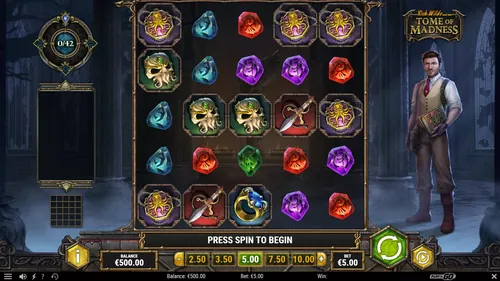
The Rich Wilde and the Tome of Madness slot by Play'n GO utilizes a 5x5 reel layout with Cluster Pays mechanics, creating a grid structure that differs significantly from the traditional 5x3 format found in legacy titles. This specific configuration allows for multiple simultaneous wins per spin, a feature also present in Reactoonz which employs a larger 7x7 grid to facilitate complex chain reactions. The expanded play area increases the potential for cascading symbol removals, directly influencing the frequency of bonus triggers during extended gameplay sessions.
Play'n GO developed Rich Wilde and the Tome of Madness as part of a broader series featuring the explorer character, distinguishing it from standalone releases like Book of Dead which shares the same developer but uses a classic five-reel setup. The thematic connection remains consistent across these titles, yet the mathematical model diverges sharply due to the absence of free spins rounds in favor of continuous cluster formations. Players seeking similar narrative continuity should note that Legacy of Dead offers comparable storytelling elements within a more conventional payline framework rather than a dynamic grid system.
The maximum win cap of 2000x the stake serves as a hard limit for payouts in Rich Wilde and the Tome of Madness, contrasting with higher ceilings seen in Rise of Olympus where players can reach up to 5000x their initial bet. This lower ceiling reflects the high volatility nature of the game, requiring patience to trigger the lucrative Lovecraftian features that define the experience. Operators offering this title must adhere to the specific RTP settings, ensuring that the theoretical return aligns with the declared 96.59% over millions of simulated spins.
Titles with similar maths
Rise of Olympus by Play'n GO presents an RTP of 96.50%, which is only 0.09 percentage points lower than the 96.59% theoretical return offered by Rich Wilde and the Tome of Madness. Both games operate with high volatility profiles, meaning players will encounter fewer frequent wins but with significantly larger payout potentials when hitting the correct symbol combinations. The mathematical similarity suggests that bankroll management strategies effective for one title may be transferable to the other, provided the player accepts the inherent variance associated with high-risk slots.
Legacy of Dead achieves an RTP of 96.58%, placing it nearly identical to the 96.59% figure of Rich Wilde and the Tome of Madness in terms of long-term expected returns. Despite this numerical closeness, the underlying mechanics differ because Legacy of Dead relies on expanding wilds within free spins, whereas Tome of Madness depends on cascading clusters on a square grid. This distinction means that while the house edge remains comparable at approximately 3.41%, the rhythm of gameplay and the timing of significant wins will vary between the two products.
Reactoonz operates with an RTP of 96.51%, sitting just below the 96.59% standard set by Rich Wilde and the Tome of Madness, indicating a slightly higher theoretical cost per spin over time. Both titles utilize a grid-based cluster pay system rather than fixed lines, allowing symbols to fall into place through gravity after winning combinations are removed. The difference in RTP translates to a marginal increase in the house advantage for Reactoonz, making Rich Wilde and the Tome of Madness statistically preferable for players focused on maximizing theoretical value retention.
Same studio alternatives
Play'n GO released Rich Wilde and the Tome of Madness alongside Reactoonz 2, both sharing the same developer pedigree and utilizing advanced grid mathematics to drive engagement. While Rich Wilde and the Tome of Madness caps its max win at 2000x, Reactoonz 2 offers a higher ceiling of 5083x, reflecting different risk appetites within the same portfolio. Players familiar with the cascading mechanics of one title will find the transition to the other seamless, though the volatility adjustments require recalibration of betting sizes to maintain consistent session lengths.
The studio behind Rich Wilde and the Tome of Madness also created Rise of Olympus 100, which maintains the 5x5 grid structure but adjusts the volatility parameters to suit different player preferences. Rich Wilde and the Tome of Madness carries an RTP of 96.59%, whereas Rise of Olympus 100 reports an RTP of 96.20%, indicating a slightly tighter margin for the latter. This variation demonstrates Play'n GO's ability to tweak mathematical models while retaining core visual and mechanical identities, allowing operators to offer diverse experiences under a unified brand umbrella.
Book of Dead stands as another major release from Play'n GO, differing fundamentally from Rich Wilde and the Tome of Madness by employing a traditional 5x3 reel layout instead of a cluster-based grid. The max win potential in Book of Dead reaches 5000x, double the 2000x limit found in Rich Wilde and the Tome of Madness, appealing to high-roller segments seeking larger jackpots. Despite these structural differences, both titles share the same developer quality standards and utilize high volatility settings to ensure that wins are less frequent but potentially more substantial when they occur.
Comparable volatility
Rich Wilde and the Tome of Madness is classified as high volatility, matching the risk profile of Reactoonz which also features a 7x7 grid and high variance outcomes. High volatility implies that players should expect longer dry spells between wins, necessitating a larger bankroll to withstand the inevitable downswings before hitting a significant payout. This characteristic is shared across most Play'n GO grid slots, where the complexity of the mechanics is balanced against the rarity of triggering the highest paying symbol combinations.
The volatility level of Rich Wilde and the Tome of Madness is comparable to Legacy of Dead, both delivering high-variance experiences that test player patience and capital reserves. While Legacy of Dead offers a slightly higher RTP of 96.58% compared to the 96.59% of Rich Wilde and the Tome of Madness, the frequency of small wins remains low in both titles. Players engaging with either game must anticipate that the majority of spins will result in no return, with profits concentrated in rare, high-multiple events driven by special features.
Rise of Olympus exhibits a volatility profile similar to Rich Wilde and the Tome of Madness, categorized as high with a maximum win potential of 5000x versus 2000x. The high variance ensures that the gameplay experience is intense and unpredictable, requiring strategic bet sizing to manage the risk of rapid bankroll depletion. Both games rely on the excitement of cascading reels to sustain interest during losing streaks, making them suitable for players who prefer action-packed sessions over steady, low-variance returns.
Comparable return figures
The theoretical RTP of Rich Wilde and the Tome of Madness is 96.59%, which is marginally higher than the 96.50% return found in Rise of Olympus. This 0.09 percentage point difference results in a slightly lower house edge for Rich Wilde and the Tome of Madness, making it a mathematically superior choice for long-term play. Over thousands of spins, this small advantage accumulates, potentially preserving more of the player's initial deposit compared to titles with lower return percentages.
Reactoonz offers an RTP of 96.51%, falling 0.08 percentage points below the 96.59% rate of Rich Wilde and the Tome of Madness. While both games provide high-quality entertainment, the slight disparity in return figures means that Rich Wilde and the Tome of Madness retains more funds over extended periods. Players comparing these two titles should note that the difference is negligible in short sessions but becomes statistically relevant when analyzing performance over hundreds of hours of gameplay.
Legacy of Dead boasts an RTP of 96.58%, closely mirroring the 96.59% theoretical return of Rich Wilde and the Tome of Madness. The near-identical percentages suggest that both games are engineered to provide similar long-term value to the player, despite their different mechanical structures. This parity allows players to switch between the two based on thematic preference without significantly impacting their expected financial outcome, assuming equal betting patterns and session durations.
Tome of Madness compared with similar titles
| Game | Studio | RTP | Volatility | Max win |
|---|---|---|---|---|
| Tome of Madness | Play'n GO | 96.59% | high | 2000x |
| Alles Spitze | Merkur (developed by edict e-gaming under the Merkur/Gauselmann brand) | 90.85% | high | 500x |
| Book of Dead | Play'n GO | 96.21% | high | 5000x |
| Big Bass Splash | Pragmatic Play | 96.71% | high | 5000x |
| Le Cowboy | Hacksaw Gaming | 96.28% | medium | 25000x |
| The Dog House Megaways | Pragmatic Play | 96.55% | very high | 12305x |
| Wild Bounty Showdown | PG Soft (Pocket Games Soft) | 96.75% | medium | 5000x |
How these titles differ
Tome of Madness utilizes a 5x5 reel layout with Cluster Pays mechanics, distinguishing it from the traditional 5x3 grid found in Big Bass Splash by Pragmatic Play. This structural difference means wins depend on adjacent symbol groups rather than fixed paylines, requiring players to adapt their strategy for the cascading reels. The Lovecraftian theme sets a unique tone compared to the fishing motif of the comparison title, creating a distinct visual identity that persists throughout every session.
The theoretical RTP for Tome of Madness stands at 96.59%, which is slightly lower than the 96.71% offered by Big Bass Splash. This 0.12 percentage point gap translates to a marginal increase in the house edge over millions of spins, affecting long-term bankroll sustainability. Players seeking higher return rates might prefer the alternative, though the volatility profile remains high in both cases, leading to unpredictable payout intervals.
Play'n GO developed Tome of Madness with a maximum win cap of 2000x, whereas Le Cowboy by Hacksaw Gaming allows payouts up to 25000x. This significant disparity indicates that while Tome of Madness offers frequent mid-tier rewards, it lacks the extreme jackpot potential available in other high-variance titles. The 5x5 grid supports this balanced approach, ensuring that large wins are achievable but statistically rarer than in games with higher multipliers.
Feature sets side by side
The cascading feature in Tome of Madness removes winning symbols and replaces them with new ones, allowing consecutive wins within a single spin cycle. This mechanic contrasts with the static reel stops of Le Cowboy, where each spin is an isolated event without symbol replacement or chain reactions. The continuous flow of the cascade increases the number of opportunities to hit a cluster during a bonus round, enhancing engagement.
Big Bass Splash by Pragmatic Play features a free spins round triggered by scatter symbols, offering a different reward structure compared to the base game cascades of Tome of Madness. While Tome of Madness relies on its core grid for excitement, the alternative title concentrates its special features into a dedicated bonus phase. This distinction affects how players pace their bets, as the absence of cascades in the latter requires waiting for specific triggers.
The Volatility setting for Tome of Madness is classified as high, meaning wins are less frequent but tend to be larger when they occur. This aligns with the medium volatility of Le Cowboy, yet differs from the very high variance of The Dog House Megaways by Pragmatic Play. Understanding this classification helps players manage their bankroll expectations, as high volatility demands patience for the substantial 2000x max win to materialize through the cluster mechanism.
Payout ceilings compared
Tome of Madness caps the maximum win at 2000x the total stake, providing a clear upper limit for potential returns on any single betting session. This ceiling is significantly lower than the 12305x max win available in The Dog House Megaways by Pragmatic Play, which offers a much broader range for high rollers. The 2000x multiplier is achieved through the cumulative effect of multiple cascades during the free spins feature, rewarding sustained winning clusters.
In contrast, Wild Bounty Showdown by PG Soft allows a maximum payout of 5000x, doubling the potential return of Tome of Madness despite its medium volatility rating. This difference highlights a trade-off between frequency and size, as the higher ceiling in Wild Bounty comes with fewer winning combinations per spin. Players targeting larger jackpots may find the Tome of Madness cap restrictive, preferring titles with higher multipliers.
Zeus vs Hades by Pragmatic Play presents a maximum win of 15000x, far exceeding the 2000x limit of Tome of Madness and offering substantial upside for lucky streaks. The massive payout potential in Zeus vs Hades attracts risk-tolerant players, whereas Tome of Madness appeals to those seeking more controlled variance. The 5x5 grid in Tome of Madness ensures that wins are distributed more evenly, reducing the likelihood of hitting the top tier.
Bet ranges compared
The minimum bet for Tome of Madness is typically set at 0.20 €, allowing players to engage with the 5x5 grid without significant financial commitment. This entry point is comparable to the low stakes found in Big Bass Splash, making it accessible for casual players who prefer extended play sessions. The low threshold ensures that the high volatility does not immediately deplete small bankrolls, as losses accumulate slowly over many spins.
Maximizing the wager in Tome of Madness allows stakes up to 100 € per spin, enabling experienced gamblers to chase the 2000x max win with aggressive betting strategies. This upper limit matches the standard cap in many high-volatility slots, including Le Cowboy, providing flexibility for varying bankroll sizes. Higher bets increase the absolute value of each win, accelerating both gains and losses due to the game's volatile nature.
Alles Spitze by Merkur offers a different betting structure with a maximum win of 500x, suggesting a more conservative approach to staking compared to Tome of Madness. While Tome of Madness supports higher stakes to match its 96.59% RTP and 2000x cap, Alles Spitze caters to players preferring smaller, more frequent payouts. The bet range in Tome of Madness accommodates both cautious and bold approaches, adapting to individual player preferences.
Which suits which player
Players attracted to the Lovecraftian theme and cascading reels should consider Tome of Madness for its immersive experience and unique Cluster Pays mechanics. The 96.59% RTP provides a fair return over time, appealing to those who prioritize mathematical fairness alongside thematic depth. This combination makes it suitable for fans of Play'n GO who enjoy strategic gameplay within a mysterious narrative framework.
For those seeking massive payouts, The Dog House Megaways by Pragmatic Play with its 12305x max win offers a more lucrative opportunity than Tome of Madness. However, the very high volatility of The Dog House Megaways requires a larger bankroll to withstand dry spells, unlike the high volatility of Tome of Madness. Players comfortable with risk and drawn to megaways mechanics may find the alternative more rewarding despite the lower RTP of 96.55%.
Casual gamers preferring stable returns might find Le Cowboy by Hacksaw Gaming with its 96.28% RTP and medium volatility more aligned with their goals. While Tome of Madness offers higher potential wins, the medium volatility of Le Cowboy provides a smoother gaming curve with fewer extreme swings. This choice benefits players who value consistency and predictable pacing over the thrill of chasing the 2000x cap in Tome of Madness.
Trying alternatives in demo
Play'n GO's Tome of Madness offers a 96.59% RTP, which establishes a theoretical house edge of 3.41% over extended play sessions. This return percentage is slightly higher than the 94.85% RTP found in Aristocrat Gaming's Buffalo slot, indicating a marginally better long-term retention rate for players testing high-volatility mechanics. Consequently, players exploring the 5x5 cluster grid can expect slower but potentially larger payouts compared to medium-volatility alternatives with lower returns.
The maximum win cap of 2000x serves as a concrete boundary for potential earnings, contrasting sharply with the 50000x max win available in Pragmatic Play's Sweet Bonanza Super Scatter. While Tome of Madness limits the upside, its high volatility ensures that wins occur less frequently but carry more weight when they do hit the reel layout. Players should adjust their session expectations accordingly, recognizing that the payout structure favors endurance over quick accumulation.
Comparing the reel structure reveals distinct mechanical differences, as Tome of Madness utilizes a 5x5 grid with Cluster Pays instead of traditional paylines. This configuration differs from the 5x4 reels in Buffalo or the 6x5 setup in Sweet Bonanza Super Scatter, altering how winning combinations form and cascade across the board. Understanding these structural variances helps players select titles that match their preferred risk profile and bankroll management strategy.
Why variety helps bankroll
Tome of Madness features a 96.59% RTP, providing a baseline for calculating expected losses during high-variance gameplay sessions. Novomatic's Sizzling Hot Deluxe offers a 95.66% RTP with medium volatility, allowing players to rotate between games to mitigate the impact of dry spells inherent in high-risk slots. This rotation strategy preserves capital by balancing periods of high drawdowns with more stable, frequent returns from lower-volatility titles.
The 2000x maximum win in Tome of Madness contrasts with the 5000x cap in Novomatic's Sizzling Hot, highlighting the trade-off between frequency and magnitude of payouts. Hacksaw Gaming's Le King reaches 20000x, demonstrating how varying max win caps influence player psychology and betting decisions across different studio offerings. Diversifying bets across these distinct payout profiles prevents emotional decision-making during losing streaks and promotes disciplined bankroll preservation.
High volatility in Tome of Madness requires a larger buffer than the medium volatility found in Novomatic's Sizzling Hot or ELK Studios' Pirots. With Pirots offering a 94.00% RTP and medium-high volatility, players can allocate smaller stakes to preserve funds while waiting for the cascading features in Tome of Madness to trigger. This mathematical approach to game selection optimizes the overall return rate across multiple sessions rather than relying on single-game variance.
Studios worth knowing
Play'n GO developed Tome of Madness, a title featuring Rich Wilde and a 96.59% RTP that defines the studio's approach to high-volatility slot mechanics. Aristocrat Gaming created Buffalo, which operates at a 94.85% RTP with medium-high volatility, showcasing a different design philosophy focused on steady engagement. Recognizing these developer signatures helps players anticipate the behavior of new releases within each studio's portfolio.
Novomatic produced both Sizzling Hot and Sizzling Hot Deluxe, maintaining a consistent 95.66% RTP across both iterations despite differing max win caps of 5000x. This consistency allows players to rely on predictable return rates when switching between classic and deluxe versions of their favorite fruit-themed slots. Such familiarity reduces the learning curve and enables quicker adaptation to specific game rules and feature triggers.
Pragmatic Play's Sweet Bonanza Super Scatter introduces a 96.51% RTP alongside a massive 50000x max win, illustrating the studio's willingness to offer extreme payout potentials. In contrast, Hacksaw Gaming's Le King provides a 96.14% RTP with a 20000x cap, reflecting a balanced approach to high-value rewards. These studios demonstrate diverse strategies in balancing volatility, RTP, and win caps to cater to different player segments.
Newer releases in the genre
Tome of Madness represents a modern take on the 5x5 cluster grid mechanic, delivering a 96.59% RTP within a Lovecraftian theme that appeals to niche audiences. ELK Studios' Pirots also uses a 5x5 layout but maintains a lower 94.00% RTP with medium-high volatility, offering a more conservative risk profile. Comparing these recent releases highlights how contemporary designers are experimenting with grid structures while adjusting return percentages to suit varying player preferences.
Hacksaw Gaming's Le King expands the format to a 6x5 reel set, achieving a 96.14% RTP and a 20000x max win through innovative scatter mechanics. This departure from the 5x5 standard seen in Tome of Madness or Pirots demonstrates the industry's shift toward wider grids for enhanced winning opportunities. Players seeking newer mechanics may find these expanded layouts provide more dynamic interactions compared to traditional cluster-based systems.
Aristocrat Gaming's Buffalo remains a relevant comparison point despite its older status, featuring a 94.85% RTP and 1200x max win on a 5x4 grid. Its medium-high volatility contrasts with the high volatility of Tome of Madness, showing how legacy titles continue to influence modern design choices. Analyzing these variations helps players identify emerging trends in grid size, volatility settings, and maximum win caps across the current market landscape.
Picking your next title
Selecting Tome of Madness requires accepting its 96.59% RTP and high volatility, which demand patience for the 2000x max win to materialize. Players preferring higher immediate returns might choose Novomatic's Sizzling Hot Deluxe, which offers a 95.66% RTP and 5000x max win with medium volatility. This choice prioritizes shorter session longevity and more frequent small wins over the rare, large payouts characteristic of high-variance slots.
For those chasing extreme multipliers, Pragmatic Play's Sweet Bonanza Super Scatter presents a 96.51% RTP with a staggering 50000x max win on a 6x5 grid. This option suits players willing to endure longer dry spells in exchange for the possibility of massive payouts, unlike the capped 2000x limit in Tome of Madness. Evaluating these max win caps against personal risk tolerance ensures alignment between player expectations and game mechanics.
ELK Studios' Pirots offers a middle ground with a 94.00% RTP, medium-high volatility, and a 10,000x max win on a 5x5 layout. This configuration provides higher potential rewards than Buffalo's 1200x cap while maintaining slightly better odds than the lowest configurable tiers of some high-variance slots. Comparing these metrics allows players to make informed decisions based on their desired balance between risk, reward, and entertainment duration.
DemoRTP & VolatilitySymbols & PayoutsBonus FeaturesStrategyBonusesMobileDownload & AppMax WinSimilar GamesReviewFAQSitemap
Tome of Madness 2026